Our core service is conducting natatorium facility studies. This article explains what we do (and...


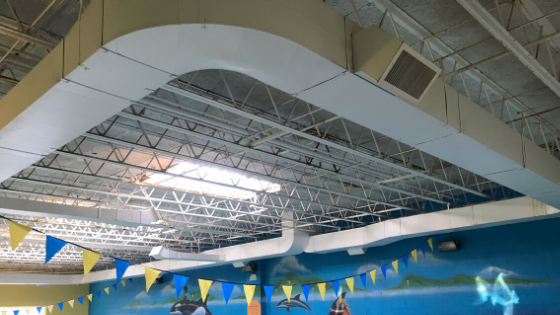
Blowing air directly at water increases the evaporation rate. In indoor swimming pools, that...
We wrote a previous article about five common mistakes in natatorium design. Now let's talk about...
Chloramines are byproducts created when chlorine oxidizes or combines with nitrogen compounds.
There are hundreds of these various byproducts, and they are irritants to peoples eyes, skin, throats and lungs. Some chloramines can off-gas into the air (like trichloramine), which cause the "pool smell", air quality problems, swimmer's cough, lifeguard lung, and corrosion in natatoriums.
Combined chlorine is a measurement of chlorine that has combined with nitrogen compounds, meaning it is no longer free available chlorine.
Combined chlorine cannot be tested direclty. Instead, it is calculated by subtracting free chlorine from total chlorine:
TAC - FAC = CC
Swimmers get sick from indoor pools because of poor air quality.
Air quality problems are driven by airborne chloramine pollution, but also if the dehumidification system or air design are not sufficient for the space.
No. The pool smell is primarily caused by chlorine byproducts like chloramines.
If you could smell chlorine gas, it could be fatal. Chloramines, on the other hand, are irritants that can cause hospitalizations, asthma attacks, and chronic breathing issues (like bronchitis). It's chloramines and other byproducts (like trihalomethanes) that comprise the pool smell.